
November 18, 2026
Dentures vs. Dental Implants in St. George: Cost & Comfort
Compare dentures in St. George, UT with implants on comfort, quoted cost and coverage, with questions to ask before choosing partials or implants.
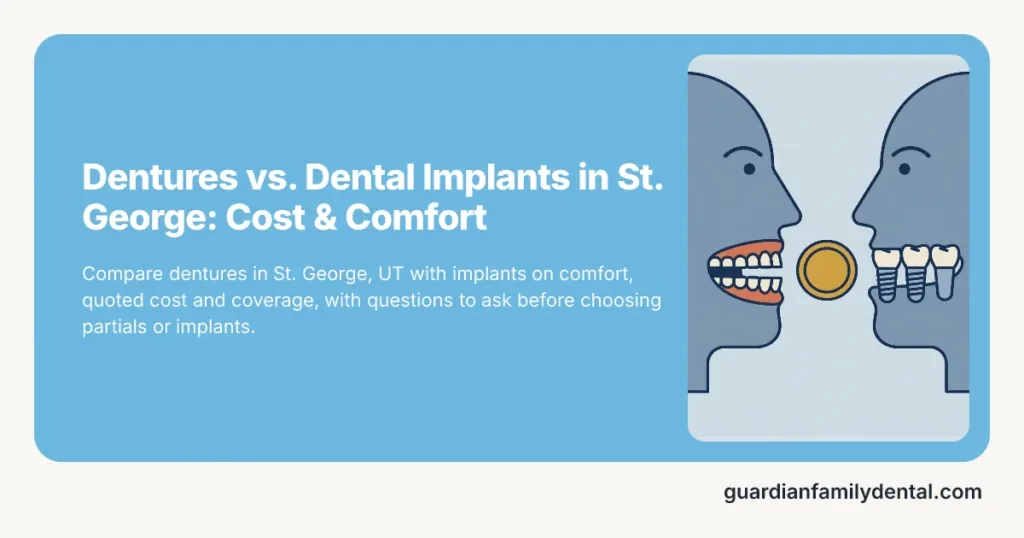
Summary: In St. George, UT, dentures offer a practical and cost-effective solution for replacing missing teeth, with options ranging from full to partial dentures. While they provide a quicker and less expensive alternative to dental implants, dentures may lack the stability and comfort that implants offer. Dental implants, though more costly and time-consuming, provide a fixed, long-term solution with enhanced stability and function.
At dinner, a denture can slip and the whole table notices. The person wearing it may keep chewing, or they may stop and hope nobody sees the problem. Lose a molar, and eating on one side starts to feel strange. A partial that fits loosely can make a family photo feel like something to endure.
The choice is not dentures or implants in the abstract. It is which option gives a St. George patient enough comfort, stability, appearance, and cost clarity to get back to normal life. Removable dentures, partial dentures, single implants, and implant-retained dentures solve different problems. People get into trouble when they compare the lowest starting price and ignore fit, maintenance, and long-term function.
Families looking for dentures in St. George, UT usually need a practical answer first. Removable dentures usually ask less upfront. Implants ask more from the budget and the treatment timeline, and they pay that back with stability a removable appliance cannot fully match. The next question is whether the mouth needs a temporary, partial, full, or implant-supported solution.
What changes when you choose dentures in St. George, UT?
A removable denture replaces visible missing teeth without placing an implant into the jaw, so it stays the practical starting point for many patients who want a faster option or lower upfront cost. Full dentures replace an arch of missing teeth. Partial dentures fill spaces when some natural teeth remain. Each choice depends on gum shape, the health of the remaining teeth, and the bite.
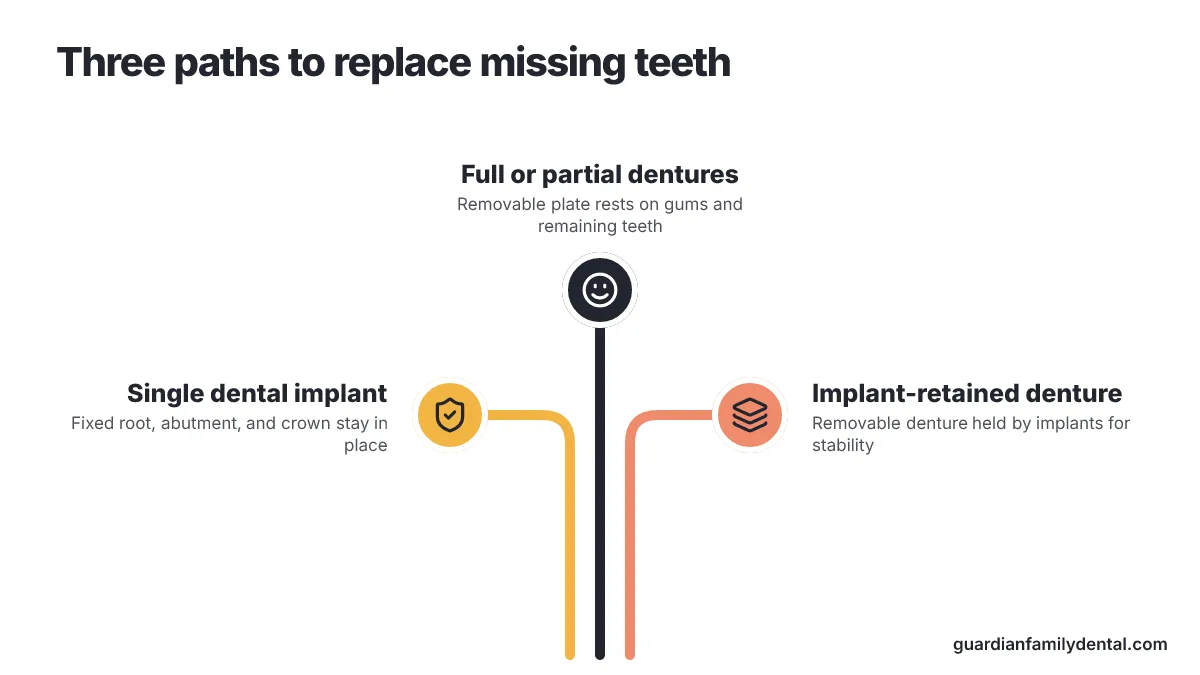
A partial denture is more than a cosmetic filler for one gap. Partial dentures spread chewing force differently from natural teeth or implants, so someone with several missing teeth may need a design that protects the teeth that are still there instead of simply closing the most obvious space.
A full denture asks the gums and bone under them to carry chewing pressure. Fit matters, because a denture that rocks or rubs changes speech, food choices, and confidence, even when it looks natural in a mirror.
A dental implant replaces the tooth root with a fixed foundation, then uses an abutment and crown, bridge, or denture attachment to rebuild the visible tooth. The National Institute of Dental and Craniofacial Research report on oral health in America says a dental implant procedure, including the implant, abutment and crown, may cost $3,000 or more, which is a national estimate rather than a St. George fee quote.
An implant-retained denture sits between the two familiar choices. The denture is still a prosthetic arch, but implants hold it in place, so the patient gets more stability than a conventional removable denture. That difference shows up most in the lower jaw, where loose movement is a common complaint.
A sensible St. George consultation should not begin with a sales pitch for the most expensive choice. The exam should identify which teeth can be saved, whether the gums and bone can support implants, whether a partial denture would overload the remaining teeth, and whether the patient needs a short-term appliance before the final one is made.
How much do dental implants cost in St. George?
There is no single implant price in St. George: the fee depends on a written treatment plan, and implants usually cost more upfront than removable dentures.
Dentists in St. George need to take scans, look at your mouth, and write down an actual treatment plan before naming an implant price. Bone grafts, pulled teeth, sedation, temporary crowns, or bridges spanning several teeth all move the dollar figure around fast.
Denture pricing follows its own logic. A quote for a removable appliance often puts the plate in one column and leaves extractions, try-ins, relines, or early tissue prep in another. Implant estimates run along surgical fees first, followed later by restorative billing for the abutment, crown, bridge, or snap-in hardware.
| Option | What the fee usually needs to answer | Comfort trade-off | Coverage question to ask |
|---|---|---|---|
| Full or partial dentures | Whether the quote includes extractions, try-ins, adjustments and relines | Removable fit depends on the gums, bite and appliance design | Utah Medicaid lists full and partial dentures among covered dental services, with some services requiring prior authorization |
| Single dental implant and crown | Whether the quote includes the implant, abutment and crown | Fixed chewing support avoids a removable appliance at that tooth | Original Medicare generally does not cover dentures or implants, except for some dental services connected to specified medical treatments |
| Implant-retained overdenture | Whether the quote includes implants, denture, attachments and maintenance | A retained denture improves hold compared with a conventional removable lower denture | Any savings from lower component pricing depend on the practice's final treatment fees |
Check insurance and public program rules before agreeing to any clinical work. Medicare rules state that Original Medicare leaves out routine dental services like implants or dentures, though exceptions exist for dental care linked to narrow medical needs. State coverage follows separate rules for qualifying residents. Under the Utah Department of Health and Human Services, covered dental services include both full plates and partials, though getting them paid for often involves waiting on prior authorization paperwork.
Changes in program policy also adjusted pre-denture prep work before the shift to managed care. An update from January 2025 showed Utah Medicaid allowing designated preparation for dentures to pay for smoothing or reshaping jawbone before a patient receives a partial or full plate.
Provider networks moved around recently for certain groups. Notes from a July 2026 Utah Medicaid session outline pregnant patients and children on EPSDT shifting out of managed dental plans and into standard fee-for-service setups. Families affected by that change should verify their dentist still takes their specific plan instead of guessing.
A low-cost removable piece works well for plenty of people. Anyone needing teeth right away, facing mouth changes after extractions, watching spending, or avoiding surgery can pick a standard plate now and look at implant options years down the road.
Partial dentures vs implants: comfort and longevity
Partial dentures usually cost less at the start, while implants usually give better stability if the mouth is healthy enough for surgery and the patient accepts a higher bill. Comfort and longevity split along that line. A removable partial can be repaired or remade, but an implant-supported tooth stays put instead of coming in and out every day.
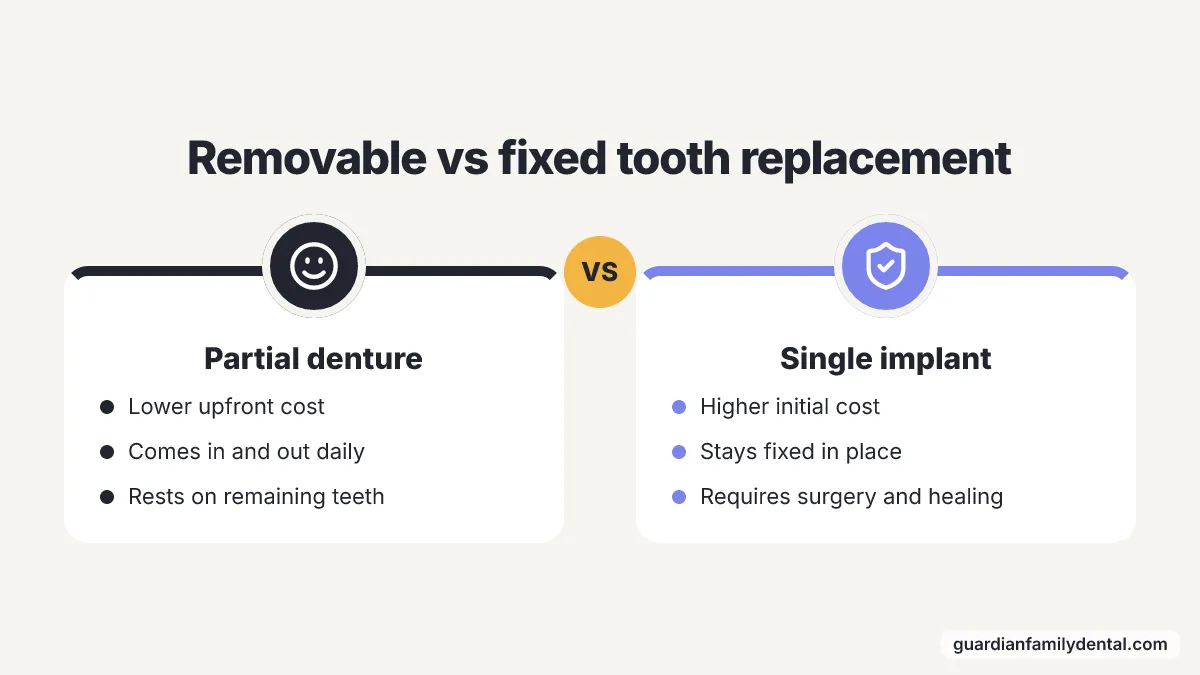
A partial denture rests on the remaining teeth and soft tissue. The comfort question is plain enough: will the clasps, bite pressure, or bulk bother the patient enough to affect speech, food choices, or the willingness to wear it?
A single implant avoids the clasp-and-plate feel of a removable partial at the missing tooth site. The trade-off is a surgical step, a healing period, and a cost that is usually higher at the start than a removable partial.
A conventional full denture and an implant-retained overdenture are closer competitors for patients missing a full lower arch. A randomized trial published in Clinical Oral Implants Research involved 122 patients and found that both new conventional dentures and later implant-retained overdentures improved satisfaction and quality of life, with the implant group showing extra gains.
That trial points to a practical idea rather than a rule for every mouth. A conventional denture that fits well can still be a real improvement, but a patient who cannot tolerate movement in a lower denture should ask about an implant-retained overdenture before giving up on dentures altogether.
Longevity depends on the mouth as much as the material. Denture bases and artificial teeth wear down, gums and bone change shape, and implants need clean tissue around them, so every option comes with maintenance instead of a finish line.
Active dental pain is the named exception to comparison shopping. A patient with urgent pain needs diagnosis and relief before choosing between dentures, partials, and implants, because the plan may change once infection, fracture, or a failing tooth is addressed.
What newer denture and overdenture options are worth asking about?
Digital denture technology is worth asking about, but it should not replace a clinical conversation about fit, bite, and follow-up adjustments. A newer material or workflow matters only if the dentist and lab use it to solve the patient's specific comfort or appearance problem.
In September 2026, Dandy introduced the Fusion denture family, a denture line that combines digitally designed bases with hand-finished acrylic and includes implant-retained overdenture options. A patient does not need to ask for that brand by name, but the launch raises a useful question: whether the practice works with digital denture workflows and how adjustments are handled after delivery.
In February 2026, 3D Systems announced new denture-base shades for NextDent printed denture bases. Shade range matters for patients who do not want pink acrylic to look artificial, especially when a smile shows more gum tissue.
In January 2026, Preat introduced the PreatLoc overdenture attachment at a stated lower component price. Component price is not the same as patient price, so the useful question is whether the final fee changes after surgery, lab work, chair time, and maintenance are included.
A same-day crown technology does not make a denture same-day by itself. CEREC Same-Day Crowns are relevant when a neighboring or opposing tooth needs a crown as part of a wider bite plan, but a full denture or implant-retained denture still needs records, design, lab work, and fit checks.
A cosmetic discussion belongs in the denture conversation when front teeth are involved. Tooth shape, tooth shade, and lip support affect whether a partial denture, full denture, implant crown, or later smile makeover looks natural next to the rest of the smile.
How should a St. George family choose without feeling rushed?
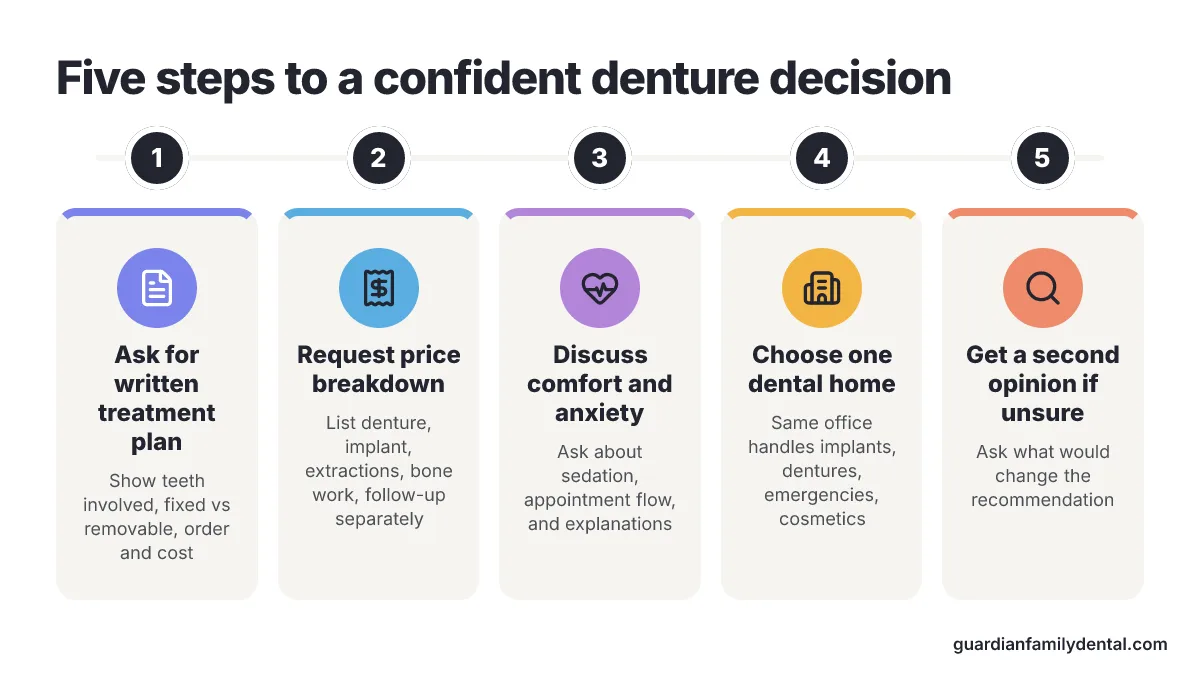
The first visit ought to end with a written decision path, not a sales pitch for the priciest option while the patient is still in the chair. A useful comparison spells out which teeth are involved, which choices come out and which stay fixed, the order of treatment, the expected cost to the patient, and the upkeep each path brings.
Guardian Family Dental is a family-first dental practice serving patients who want calm, patient-education-focused care from a bilingual, military-trained, continually-educated doctor team. The practice offers Dental Implants, Zoom! Teeth Whitening, Veneers & Smile Makeovers, Dentures & Partials, CEREC Same-Day Crowns and Emergency Dentistry, so the denture talk can cover chewing, appearance, and urgent pain instead of splitting those problems into separate boxes.
Comfort matters as much as the material on the lab slip. If dental anxiety is part of the picture, ask which sedation choices are available, how the appointment will unfold, and whether the dentist pauses to explain each stage before work begins.
Ask for the price breakdown in writing before comparing plans. The estimate should list denture or implant fees on their own, along with extractions, bone work, sedation, temporary teeth, final teeth, follow-up visits, and replacement parts.
A family choosing one dental home should ask whether the same office can handle cleanings, children's visits, emergency dentistry, dentures, implants, and cosmetic changes. Keeping those conversations under one roof cuts down the chance that a denture plan fixes chewing while leaving the smile line awkward, or that an implant plan ignores the patient's fear of surgery.
A second opinion helps when the recommendation feels too fast, too vague, or too expensive to understand.
The best question is plain: what would change your recommendation? A dentist who can explain that a healthier remaining tooth supports a partial, that weak bone changes the implant plan, or that a lower denture may need implants for stability is giving the patient the reasoning needed to choose.
Reviews do not replace an exam, but they do say something about whether patients felt heard during care.
A household that speaks Spanish should bring up language comfort at the first call, before consent forms show up. A bilingual dental team makes the cost, surgery, aftercare, and maintenance conversation easier to follow before anyone signs a treatment plan.
When to seek dental care before choosing
Active dental pain, a suspected infection, a fractured tooth, or a failing tooth needs diagnosis and relief before any comparison of dentures, partials, and implants. The treatment plan may change once that problem is addressed, so urgent care comes first and the tooth-replacement decision follows.
Choosing between dentures and implants: the next step
Start with an exam that compares the real choices in your mouth: a partial denture, full denture, single implant, bridge, implant-retained overdenture, or a staged plan. The right first step is not picking the fanciest material. It is getting a written plan that explains comfort, cost, timing, and maintenance in plain language.
Bring your insurance or benefits information, a list of the teeth that bother you, and the foods or situations you are avoiding. A dentist can then tell you where removable dentures are enough, where implants are worth the larger investment, and where a temporary step makes more sense before final teeth are made. After that, the advice stops being general and becomes a treatment decision tied to your exam, your budget, and your comfort.
Frequently Asked Questions
What are the main differences between dentures and dental implants in St. George?
Dentures in St. George offer a practical and cost-effective solution for missing teeth, with options like full and partial dentures. They are less expensive and quicker to obtain than implants but may lack stability and comfort. Dental implants, while more costly and time-consuming, provide a fixed, long-term solution with enhanced stability and function.
How do dentures affect daily life in St. George?
Dentures can change daily life by replacing visible missing teeth without implants, offering a faster and lower-cost option. However, they may slip during meals or affect speech and confidence if not fitted properly. A full denture relies on gums and bone for support, while partial dentures require careful design to protect remaining teeth.
What should I consider when choosing between partial dentures and implants?
When choosing between partial dentures and implants, consider the initial cost and comfort. Partial dentures are less expensive upfront but may affect speech and food choices due to their removable nature. Implants offer better stability and comfort but involve a surgical step and higher initial costs. The choice depends on mouth health and budget.
How does the cost of dental implants in St. George compare to dentures?
The cost of dental implants in St. George varies based on individual treatment plans, including scans, extractions, and other procedures. Implants generally have higher initial costs than dentures, which may include separate fees for extractions and adjustments. Dentures are often more affordable upfront, making them a practical choice for many.
What are implant-retained dentures, and how do they differ from conventional dentures?
Implant-retained dentures are prosthetic arches held in place by implants, offering more stability than conventional removable dentures. This is particularly beneficial for the lower jaw, where loose movement is common. They provide improved hold and comfort compared to traditional dentures, which rely solely on gums and bone for support.
Where to go next
Sources
- National Institute of Dental and Craniofacial Research: Oral Health in America: Advances and Challenges
- Medicare: Dental Services
- Utah Department of Health and Human Services: Medicaid Dental Benefits
- Utah Medicaid: January 2025 Medicaid Information Bulletin
- Clinical Oral Implants Research: A Comparison of Implant-Retained Mandibular Overdentures and Conventional Dentures on Quality of Life
- Dandy: Fusion denture line launched
Book Your Consultation
Call 435-656-8888 for an appointment or schedule online for an appointment with your St. George, UT dentist.